Pittsburgh, PA Vehicle Upgrade Guide: Tint, Protection, Style, and Smart Planning
Key Takeaways
- Choose upgrades according to comfort, protection, appearance, convenience, and budget.
- Compare window film performance specifications, not darkness alone.
- Use paint protection film for high-impact areas and ceramic coating for easier exterior care.
- Confirm Pennsylvania visibility and equipment requirements before modifying glass or lighting.
- Request itemized estimates and clear aftercare instructions before scheduling work.
Pittsburgh drivers deal with bright river-valley sun, steep neighborhood streets, winter road treatment, construction debris, and frequent temperature swings. That makes a thoughtful upgrade plan more valuable than a rushed list of cosmetic changes. Whether the priority is cabin comfort, paint preservation, or a sharper appearance, ceramic coating for cars in Pittsburgh, PA, can be one part of a broader approach tailored to how and where the vehicle is driven.
The best upgrades solve a daily problem. A commuter crossing bridges during late-afternoon glare may value window film, while a new vehicle owner who regularly drives I-376, Route 28, or Parkway North may be more concerned about chips and grime on the front end. Start with the vehicle’s use, not the trend of the moment.
Why a Vehicle Upgrade Plan Helps
Planning prevents overlap and helps Pittsburgh owners spend where it matters most. Window tint protects glass, paint protection film shields painted panels from physical impacts, and ceramic coatings can make routine cleaning easier. Installing products in the right order can also prevent unnecessary rework, such as polishing paint after installing film or removing old tint before completing other interior work.
For drivers searching for automotive ceramic coating near me, it is more helpful to first identify which exterior surfaces and maintenance challenges need the most attention. A vehicle parked under trees in Squirrel Hill may regularly encounter sap and bird droppings, while one that travels through the North Hills during winter may need protection and cleaning practices suited to salt residue, slush, and road grime. This approach helps ensure the chosen upgrade solves a real problem rather than simply adding another product.
Set Clear Goals Before Choosing Products
Write down the main reason for upgrading before comparing packages. Most projects fall into one or more of these categories:
- Comfort: Reduce glare, manage cabin heat, and make long drives more pleasant.
- Protection: Limit exposure to road debris, stains, UV light, and everyday wear.
- Appearance: Refresh the look with film, graphics, wheels, lighting, or interior details.
- Convenience: Add audio, remote-start features, or other technology that supports daily use.
- Long-term value: Keep the vehicle presentable and easier to maintain over time.
A family SUV, a contractor’s work truck, and a weekend sports car should not receive the same upgrade recommendations. The intended use should guide coverage areas, material choices, and spending.
How to Compare Window Tint Options
Darkness is not the same as performance. Dyed films are commonly selected for appearance and privacy; carbon films can offer a darker look with stable color; metallic films may provide heat performance but can affect electronic signals; and ceramic films are often chosen for strong heat control and optical clarity without metal content.
What to Compare
- Visible light transmission, or VLT: A lower number generally means a darker film.
- Heat and infrared rejection: Useful for reducing the feeling of radiant heat in the cabin.
- UV filtering: Helps protect occupants and interior materials from sun exposure.
- Clarity and color stability: Important for night driving and a consistent appearance over time.
- Signal compatibility: Ask whether the product could affect radio, GPS, mobile, or toll-tag performance.
- Warranty and care: Review what is covered and when windows can be cleaned or lowered.
Pennsylvania owners should verify current tint requirements before choosing a shade.
Paint Protection Film and Ceramic Coating: Different Jobs
Paint protection film is a clear physical barrier intended for high-impact areas. It makes particular sense on a front bumper, hood edge, front fenders, mirrors, door edges, and cargo ledges, where gravel, insects, road spray, and loading activity create repeat wear. Partial front-end coverage can be a practical choice for Pittsburgh drivers who want protection without covering every panel.
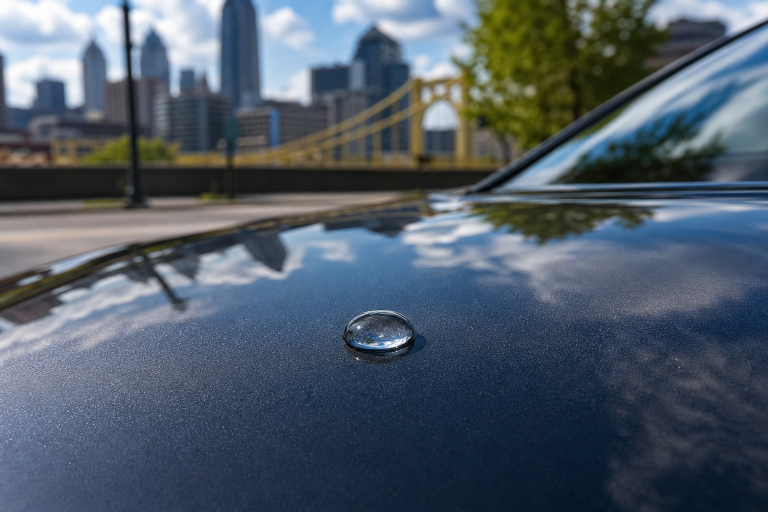
Ceramic coating is a surface treatment that can improve gloss, water behavior, and cleaning efficiency when applied to properly prepared paint. It does not prevent every scratch, chip, dent, or parking-lot impact. Existing chips and deep scratches may remain visible under clear film or coating, so discuss paint correction before installation.
A Simple Comparison
- Window tint: Applied to glass for glare management, privacy, UV filtering, and comfort.
- Paint protection film: Applied to painted panels for stronger resistance to chips and light abrasion.
- Ceramic coating: Applied to paint and select exterior surfaces to support gloss and easier washing.
Add Style Without Creating Problems
Wraps, graphics, wheels, lighting, and interior accessories can personalize a vehicle, but every change should be evaluated for visibility, maintenance, insurance, future removal, and resale. Avoid covering lamps, reflectors, cameras, sensors, or identifying markings. Select materials that can be serviced or removed cleanly if plans change.
Safety should remain the deciding factor for lighting and electronic modifications. Federal guidance notes that businesses modifying vehicles should not knowingly make required safety equipment inoperative, a principle explained in NHTSA’s discussion of aftermarket vehicle modifications.
Build a Practical Pittsburgh Upgrade Budget
Instead of choosing solely by the lowest quote, build a budget in levels. A basic plan may include one high-priority improvement, such as a tint or front bumper film. A balanced plan can combine cabin comfort with targeted paint protection. A complete plan can be staged over time, beginning with protection before adding appearance and electronics.
Ask for an itemized estimate that separates materials, surface preparation, removal of old film or adhesive, labor, taxes, warranty coverage, and follow-up work. This makes comparisons clearer and reduces surprise charges.
Questions to Ask Before Installation
- Which exact product will be used, and what are its published specifications?
- How will paint, glass, trim, cameras, and sensors be prepared and protected?
- Will existing scratches, chips, old tint, or adhesive require additional work?
- What curing period applies before washing the vehicle or lowering tinted windows?
- How are bubbles, lifting edges, contamination, or peeling handled under warranty?
Care After the Upgrade
Use clean microfiber towels and mild automotive products, avoid abrasive pads and harsh solvents, and remove salt, sap, and bird droppings promptly. During regular washing, inspect film edges, seams, lights, and sensors. Keep product records and warranty documents with the vehicle’s maintenance history.
Conclusion
A thoughtful vehicle upgrade plan helps Pittsburgh drivers balance comfort, protection, appearance, and cost. By choosing products based on actual driving conditions, confirming local requirements, using qualified installers, and following proper maintenance practices, owners can improve their vehicles without unnecessary additions. Careful planning also helps protect the vehicle’s condition and long-term usability.